|
Flarestar Observatory is located on the rooftop of an apartment block. Due to building restrictions, the observatory was constructed in a way to cover the least possible footprint without comprising operational capability. The observatory is a ready-made run-off roof observatory from the Italian company - Tecnosky. This design enables the telescope to gain an unobstructed view of the heavens that greatly diminish set-up times and cooling down periods. This approach allows astronomical imaging at short notice, which is great for utilizing the telescope during those short breaks in clouds.
Telescope, Cameras & Software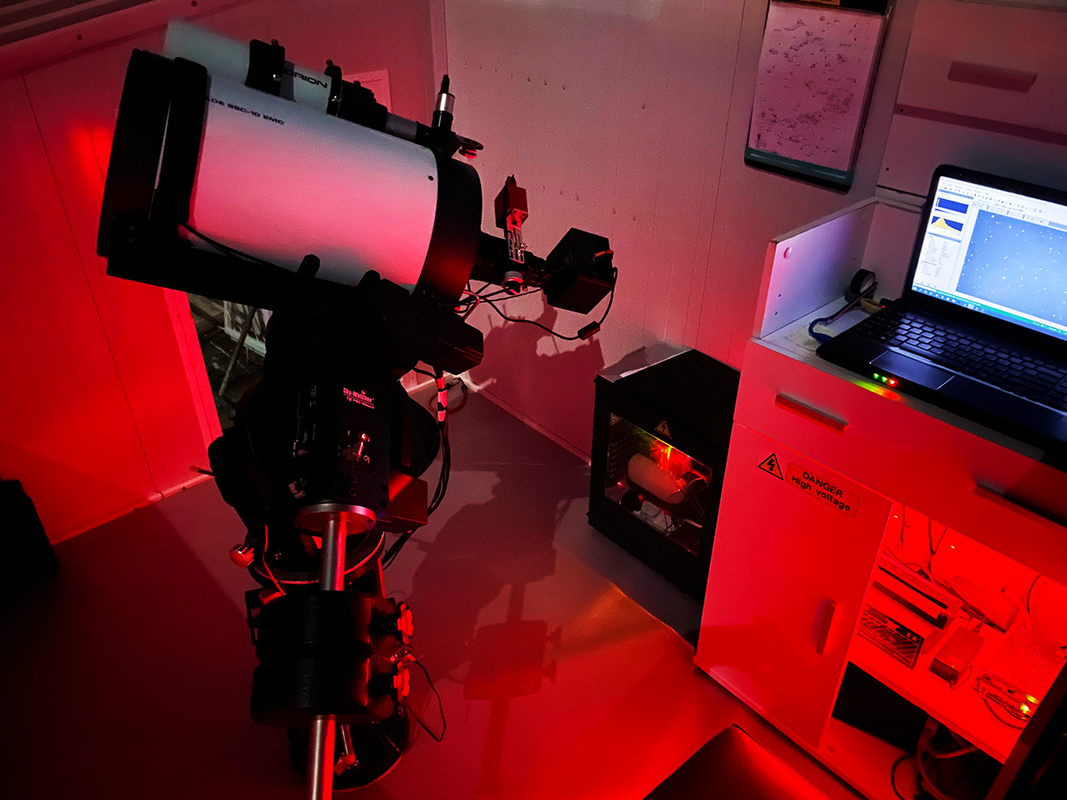
The primary telescope utilized at the Flarestar observatory is the Meade SSC-10 Schmidt-Cassegrain telescope, boasting a native configuration with an f/6.3 setting, resulting in a focal length of 1600mm. This particular configuration was deliberately selected due to its relatively fast f-ratio, rendering it highly suitable for the purpose of deep sky imaging. The Optical Tube Assembly (OTA) of this telescope is securely mounted onto an EQ8 Pro equatorial mount, which represents an upgrade from its previous mounting. The choice to transition to the EQ8 mount was driven by the need to accommodate potential future enhancements.
The process of remote operation for the EQ8 mount is facilitated through a crucial link between the mount itself and the observatory's computer system. This connection is established using a HitecAstro EQDIR adapter, serving as a pivotal interface between the EQMOD software and the ASCOM (Astronomy Common Object Model) system. This arrangement obviates the necessity of employing the mount's standard handheld controller, as it is rendered redundant in the context of remote operation. The ASCOM system, which is utilized in this setup, deserves special mention. ASCOM represents a comprehensive set of interface standards designed specifically for the precise control of astronomical instruments and related devices. Within this framework, individual software drivers interact seamlessly with the associated equipment, ensuring a unified and streamlined operational environment. The remote pointing and slewing of the telescope, fundamental to its functionality, are executed through the utilization of Sequence Generator Pro (SGP) software. This software serves as a sophisticated and capable tool for the precise control of the telescope, enabling the control of all the observatory's instrumentation. Imaging CameraThe main scientific camera at Flarestar is a Moravian G2-1600 CCD camera that employs the KAF1603ME chip. This camera was purchased after several other cameras were considered. In the end, the G2-1600 camera was chosen over others as its workmanship is of high quality and the electronics inside produce very low noise levels that is desirable for achieving high-quality data. Despite that the KAF1603ME has only 1536 × 1024 pixels, the 9 × 9 μm pixel size is just the right match to local atmospheric seeing. The dimension of the chip at 13.8 × 9.2 mm is large enough to cover a good range of comparison stars for aperture photometry. Furthermore, the CCD's sensitivity is quite high at 80% QE and the Full Well Depth of ~100,000 e is great photometric asset. Camera cooling for the Moravian G2-1600 is capable to reach -50 degrees Celsius below ambient.
The Moravian G2-1600 CCD at Flarestar is equipped with an internal 5-filter wheel that accommodates 1.25" filters without any detrimental effects from vignetting. 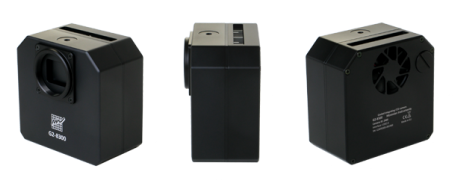
FiltersFor photometric measurements, B, V, I (Johnson/Cousins) filters have been fitted onto the CCD's internal filter wheel to convert CCD instrumental magnitudes into the photometric B,V,I standard . A Clear glass (C) filter is also employed to maintain the same focus when switching from coloured filters to white light. A Clear Blue-Blocking (CBB) filter occupies another slot onto the filter wheel that is utilized for exoplanet observation.
Although photometric work predominantly occupies the observational schedule, occasionally, aesthetic colour images have also been taken. Aesthetic images are acquired through a Canon DSLR camera that has been used to take pictures of celestial objects ranging from comets to distant galaxies. The quantum efficiency of the DSLR is quite low when compared to CCD cameras, however, the sensitivity of the DSLR is still good enough considering it is a one-shot colour camera that enjoys a generous wide field of view. 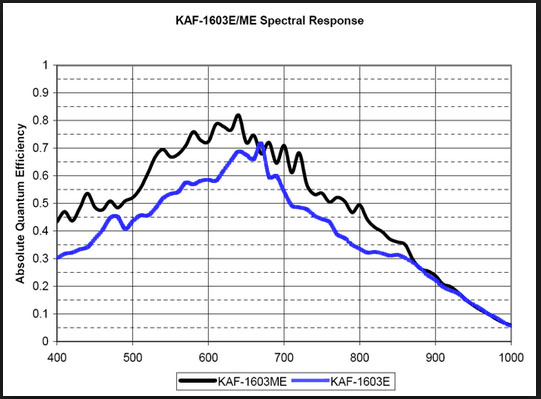
The Moravian G2-1600 CCD employs a KAF-1603ME chip that has a Quantum Efficiency of 80%, peaking at around 640 nm.
Flat field Acquisition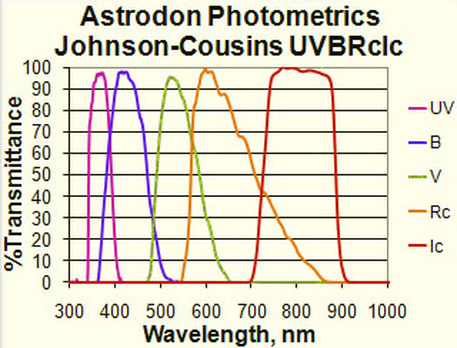
B, V and Cousins Infrared (Ic) photometric filters are installed onto the CCD's internal filter wheel to convert instrumental magnitudes into the standard BVI system.
For astronomical imaging, flat field calibration consists of taking an image of an evenly illuminated field as to calibrate pixel to pixel sensitivity variations and to even out any effects of vignetting. The effects of vignetting is well known to astroimagers as a light intensity gradient from the edges of the image to the centre of the image.
Methods of flat field acquisition can differ between observers. However the principle remains essentially the same. 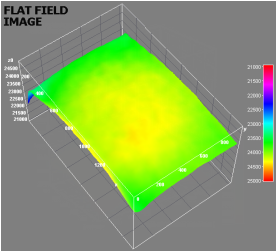
Digitally enhanced false colour image of a flat field acquired through the method described above. Variation across the field is less than 2% of the well depth capacity of the CCD. The gradient shown here has been exaggerated to show gradient effects.
At Flarestar, flat fields are taken by illuminating a translucent perspex that is illuminated by reflected light hitting the back wall of the observatory. The even reflection enhance the quality of the flat fields as the light from the strategically placed Tungsten light is evenly distributed. Tungsten bulbs emit a significant portion of their light in the infra-red that is desirable when working through at this bandpass. Sky-flats can also be taken when desired. An colour-enhanced flat field is depicted above that shows the a maximum range of less than 3% across the image.
Software for System OperationSequence Generator Pro (SGP) is the software of choice to operate all equipment remotely. SGP PRO operates the main CCD camera, the telescope's mount, the autoguider camera, the autofocuser motor, and the observatory’s roof. SGP interacts with the autoguider via the PHD2 software avoiding the need to flip between program windows when in operation. SGP also operates the auto focuser routine as well as the programmable operation of the mount via a GUI interface. This program has also been used to operate the DSLR remotely when needed. The observatory’s roof is operated by SGP through software driver that acts as an interface between the 8-channel KMT remote switch module and the roof motor.
The pointing of the mount to center targets is done through SGP's plate solving subroutine software that is achieved within seconds. Via plate solving, the software can achieve pointing precision down to well less 1 arc minute easily. This ensures that no matter how small the field of view is, the target is always centered on the CCD chip. The goal of SGP is to provide a best-in-class image capture suite for astrophotography and scientific imaging. SGP's philosophy is based on the concept that a lot of equipment is rigged to the telescope and sometimes it is difficult to get it all working together. SGP PRO was written in a way that is capable of executing complex sequences of capture events through a straightforward process without the need to go into any scripting processes. Thus, this great program allows spending more time acquiring images and less time dealing with rigging issues. 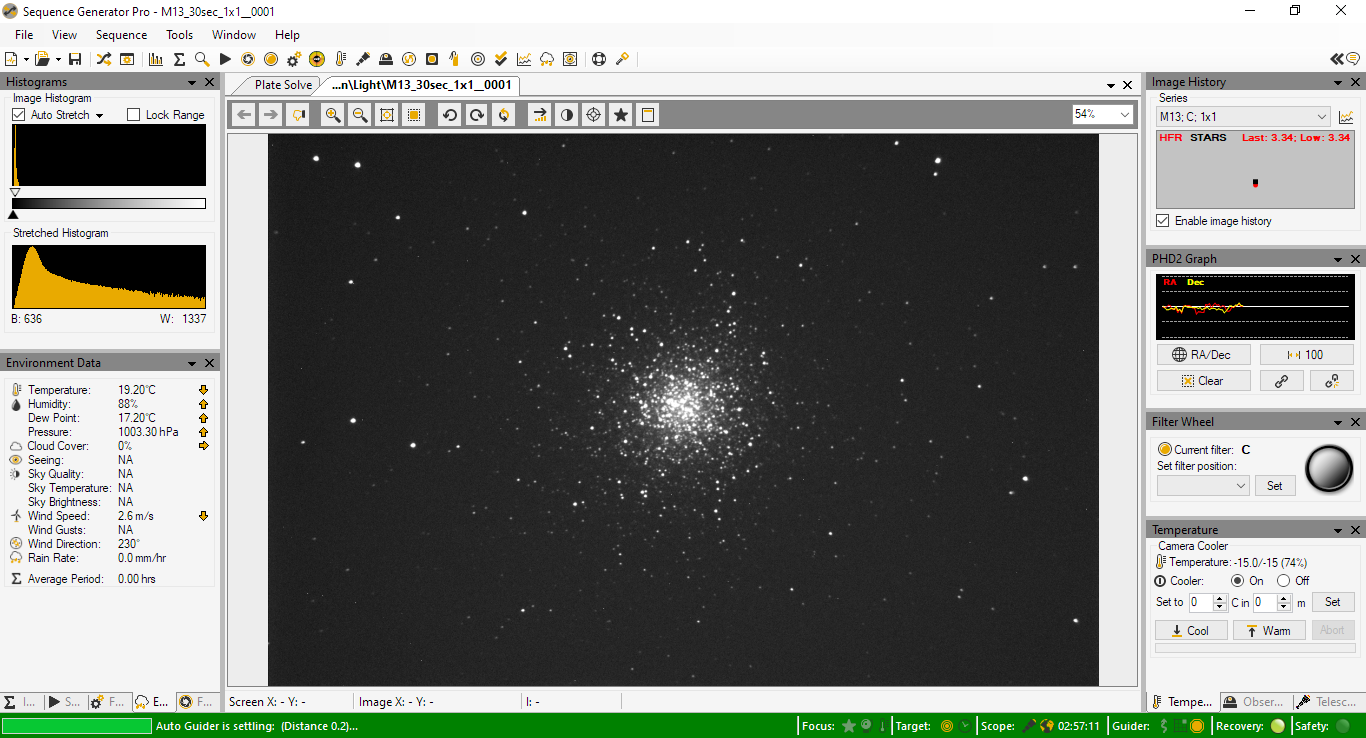
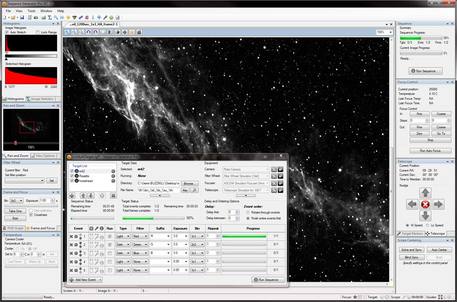
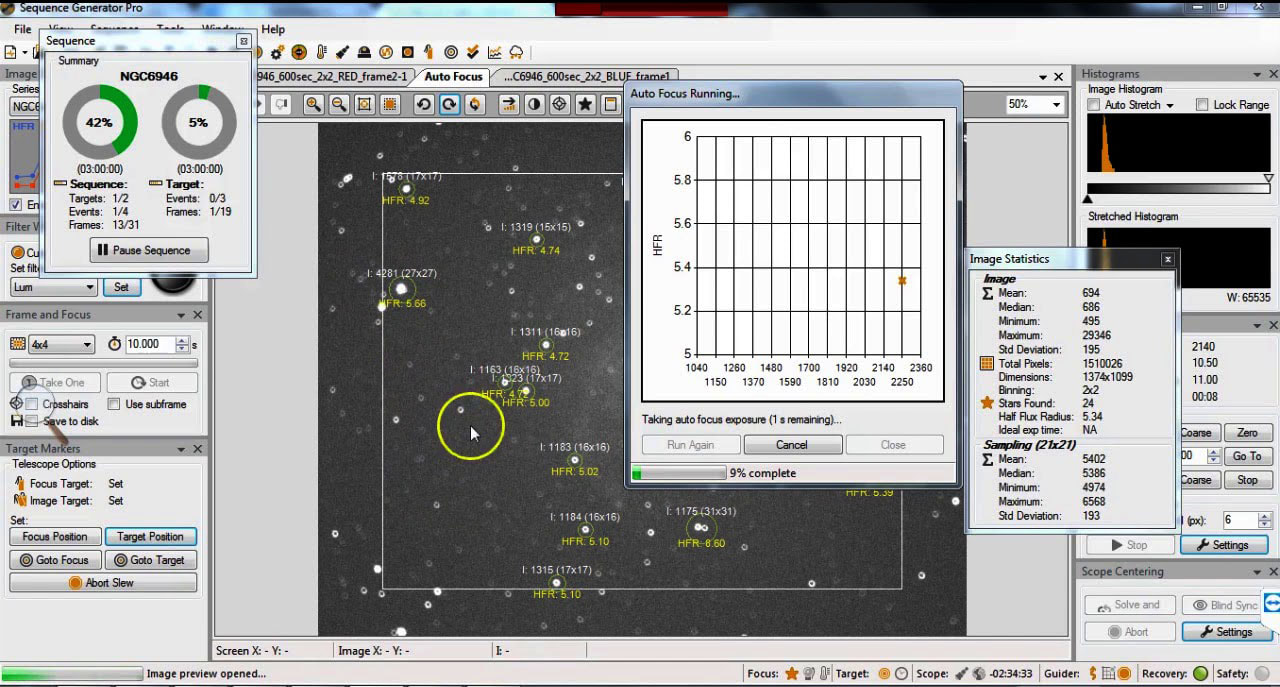
Sequence Generator Pro controls the all the operations at the observatory. Plate solving, interaction with the PHD2 guiding software, camera control and the setting of image sequencing permits the system to function with minimal user intervention. The only interaction required at Flarestar concerns the opening of the observatory and initial flat-field calibration. SGP then takes over all the necessary functions required for the night.
|
The Observatory's Structure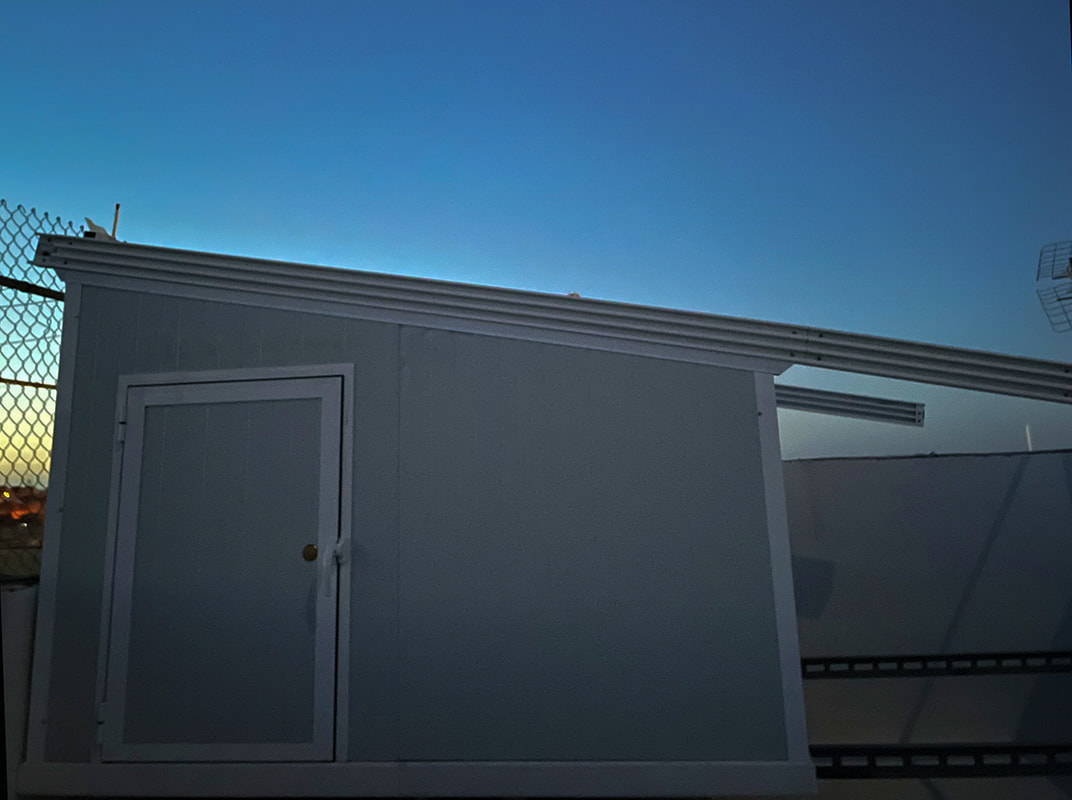
Flarestar Observatory is a motorized run-off roof, 2x2 meter structure with insulated panels covering all wall and roof panels that helps to keep the temperature inside down during those hot summer days.
The whole structure is mounted on a solid steel platform that keeps all of the wall panels as a single structure. The panels are made up of an aluminum cover with a wall insulation of 3.5 cm thickness. All of the panels including those of the roof do not need any maintenance at all as they can withstand the harshest environments. The roof slides open thanks to the guidance of the side rails where it is opened or closed by the anchoring of the roof panels to a nylon heavy-duty belt. For aesthetic reasons, the walls of the observatory were custom ordered to be of a shallower height than usual, however, this reduction is not thought to have any impact on the observatory's operation. The whole set-up at the observatory is configured to be operated remotely for most of the time. The advantage of having a ready-made observatory is that these have been well tested and are ready from the start to operate remotely without any problems. 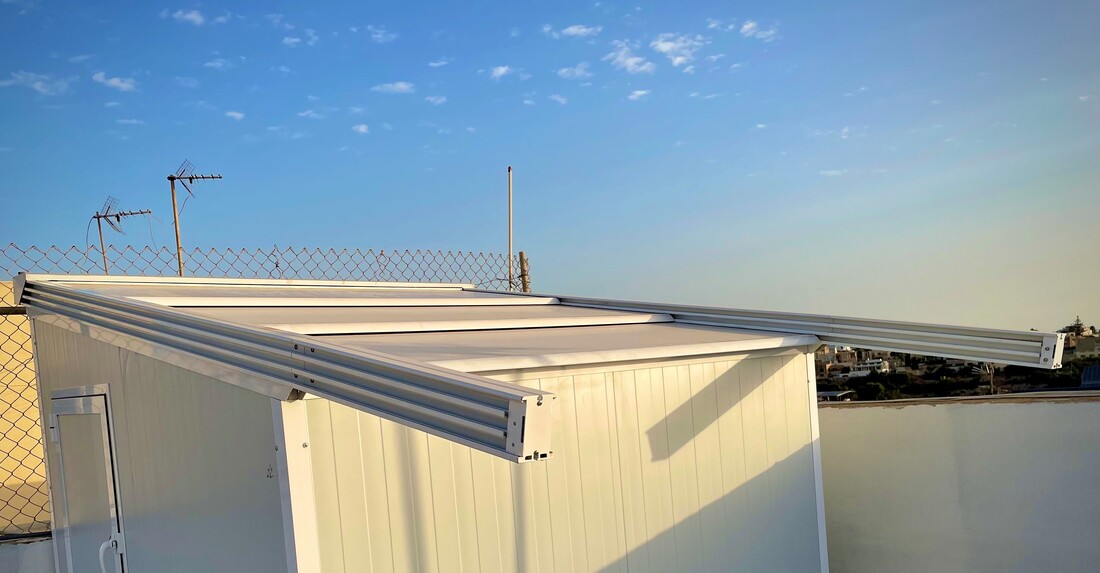
Image above shows the roof structure. the three panels slide over the extended arms to expose the telescope to the sky.
Utility EnclosureThe utility support storage houses essential components of the observatory, including power supplies, electronic modules and other accessories. The lid of the cabinet can be opened for access to a supplementary PC. The main PC that host all of the control operations is a mini-PC that operates during autonomous operation. The use of mini-pc was found to be advantageous as it could be located nearer to the telescope's equipment that prevented interrupts due to cable length. Air vents were installed to prevent heat buildup, and a 1500 VA UPS unit provides backup power and enables safe shutdown in case of a power failure. The UPS can be managed remotely through the observatory's PC browser, and this unit serves as the central control center for the observatory, issuing operational commands to the telescope and other equipment.
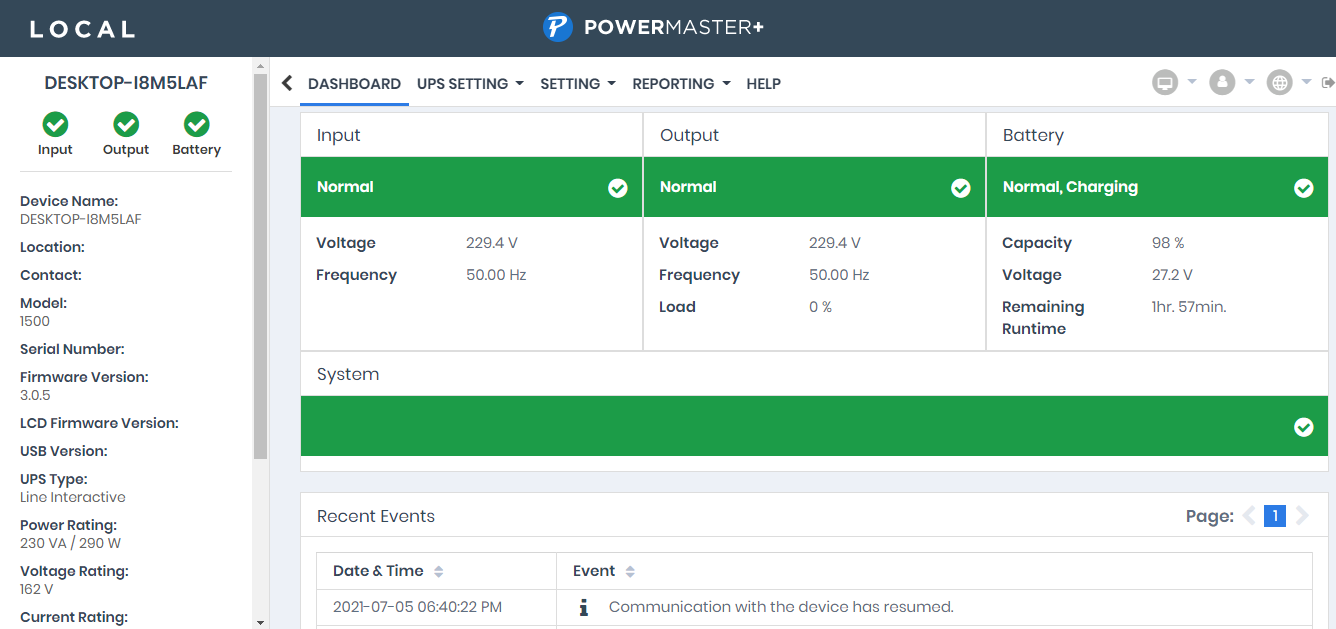
UPS management as accessed through the web browser. Any anomalous values help to readily identify any possible equipment failure.
Remote OperationAs the observational schedule often entails long hours of monitoring for time-series photometry, remote operation was always considered as a necessity. Remote operation is conducted through SGP PRO and is monitored from a 'control room' at home situated 15 meters away. Nevertheless, the distance of the control room from the observatory is actually irrelevant as the system operates through remote access from anywhere over the internet. The observatory's PC that controls all equipment is connected to the internet via an external LAN CAT-6 cable. A 8-port 10/100 Mbps Ethernet Network switch also allows the simultaneous connection and operation of the PC and IP cameras that allows me to monitor the function of the telescope. The interface between the PC and the equipment is achieved through the use of an 8-port relay module that enables to switch on and off, all of the observatory's equipment remotely. The observatory's software and ASCOM drivers act as a safety monitor that whenever a condition (being atmospheric or technical such as loss of power etc) is not met, the system initiates a shut-down procedure.
The operation of the observatory's PC is usually monitored from the observer's end through Google's Chrome Remote Desktop software that operates through the Chrome bowser and allows access and operation of a remote PC through another computer (or mobile phone) over the internet. Having control to the observatory's PC enables the operation of the telescope, cameras, autoguider and observatory roof to act as a coherent unit. However, despite all of the precautions taken to ensure optimal operation, this was not considered as being enough to ensure that all goes well. Cables might get snagged and clouds might roll in. To overcome this problem, two IP cameras with IR capability have been employed. One camera oversee the status of the telescope's mount while the other acts as a supplementary cloud monitor. The cloud camera employs a high definition (HD) sensor that is sensitive enough to detect high thin clouds as well as stars down to 5th magnitude. When the observatory is closed, the telescope camera also act as security camera along with other security measures.
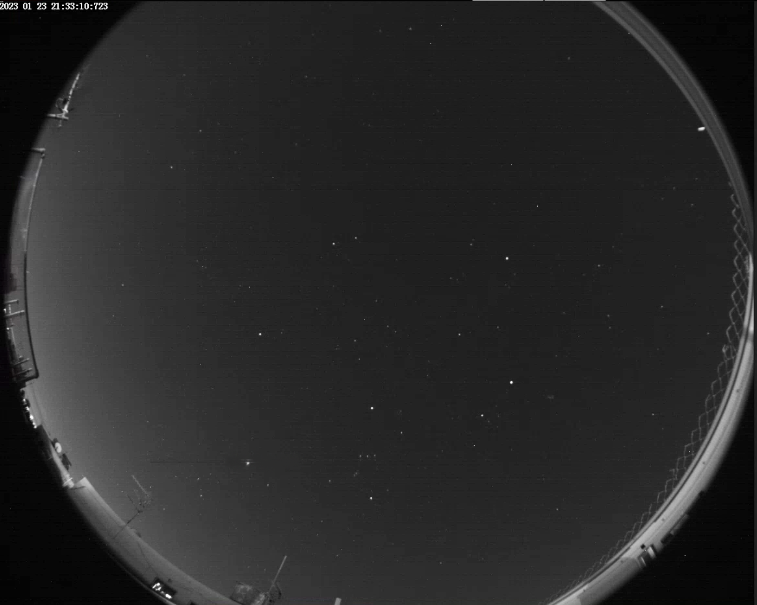
Image capture from the All-Sky Camera acts as a back-up cloud monitor to the AAG. Although PHD2 alerts when the guidestar is lost due to clouds, this camera is very useful to determine whether it was due to a passing cloud or not.
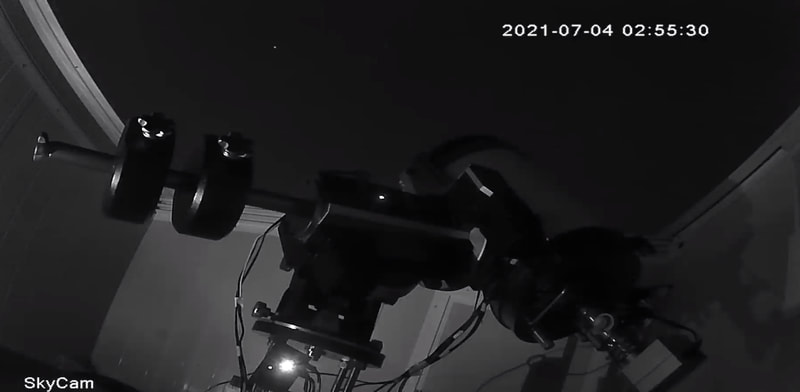
An internal camera is employed to ensure that the telescope is operating as it should be. This cam is also useful to ensure that the telescope is parked prior to roof closure.
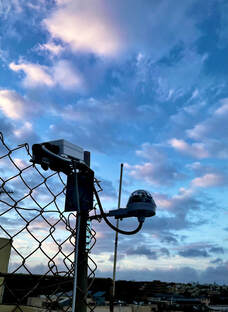
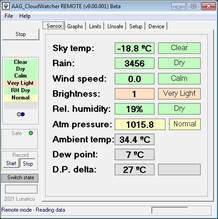
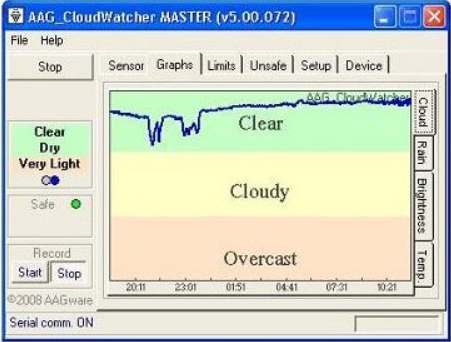
Having a lot of equipment at stake at the mercy of unpredictable weather conditions is set to bring about sleepless nights. As an additional precaution, a Lunatico AAG CloudWatcher unit has been installed. This system triggers an alarm at home in case the sky clouds over or the tiniest of rain droplets falls unexpectedly. Alarms are set to trigger a function within SGP that parks the telescope to close off all equipment.
Weather details through the AAG are embedded on the FITS headers of each image generated by the main camera. The AAG utilize an internal infrared sensor and thermometer that enables it to measure the temperature of the sky and derive cloud intensity above the observatory. The AAG also incorporates a light sensor to distinguish between day and night. Approaching daylight triggers a function to park the telescope when the sky gets too bright for observation. An embedded temperature sensor is used to read the ambient temperature at the observatory and can be used to trigger autofocus routines at the telescope to maintain focus throughout the night. Relative humidity and atmospheric pressure are also monitored by this device that can be useful to detect an approaching weather front that may bring about adverse weather conditions.
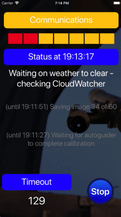
In case that the observatory PC hangs or some other action at the telescope is not carried out in a specific time, an independent software by Lunatico Astronomia called GNS or 'Good Night System' is used on a smartphone to monitor the timing of all operations. Whenever an event operates outside the limits programmed, an alarm is triggered that alerts the observer to take over command. Autoguiding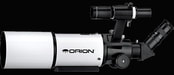
Autoguiding is achieved through the use of an Orion ST-80 Guidescope that is mounted on the telescope's OTA. This small 80 mm aperture (400 mm focal length) telescope is a very good instrument for guiding as its aperture is big enough to enable guiding on stars as faint as magnitude 11.5mv. The camera employed for autoguiding is a ZWO ASI120MM that utilise a monochrome CMOS chip (1280 x 960 pixels of 3.75 µm square). Through this set-up this system ensures that a guide star is always available for autoguiding wherever the telescope is pointing.
The software of choice for autoguiding is the popular PHD2 Guiding. PHD2 is the enhanced, second generation version of the popular PHD guiding software from Stark Labs. PHD2 is now an open-source project, supported by an active community of developers and astro-imagers.
In PHD Guiding, all calibration is taken care of automatically. There is no need to tell it anything about the orientation of the camera. The automatic calibration routine takes care of this. Once correctly configured through SGP PRO, the software can also automatically choose a suitable guidestar and starts autoguiding without any further user intervention. 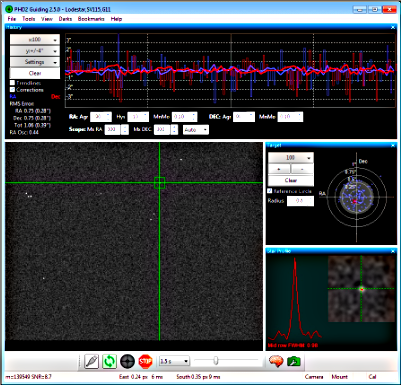
Analysis Software
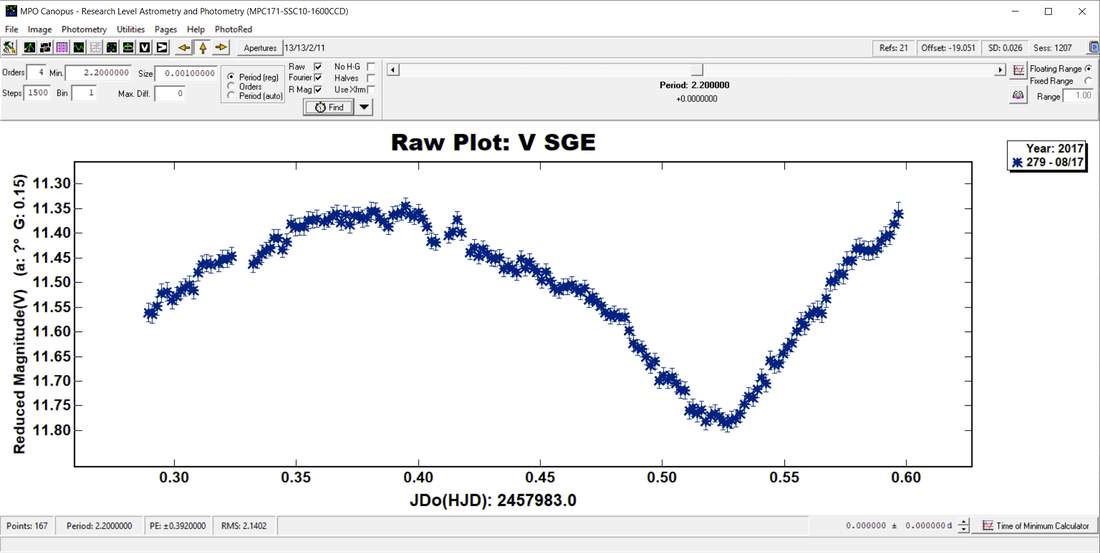
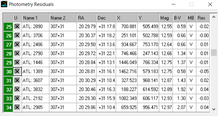
The analysis pipeline is performed through several programs. The main program is MPO Canopus that is capable to do image calibration, and aperture photometry. Many other analysis programs are employed for certain specific tasks.
MPO Canopus does more than simple aperture photometry as it is equipped with powerful routines that are specific for asteroid and variable star analysis. This software can also draw up variable star reports in AAVSO format for submission to the AAVSO and other similar entities. 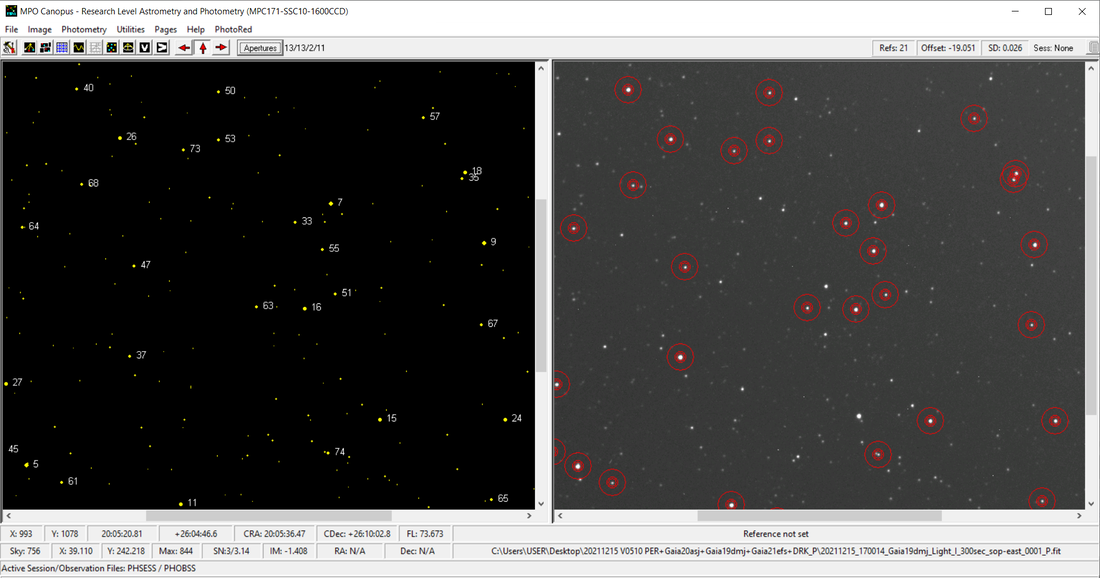
|